Your Puppy's First Walk in Bengaluru: A Calm Start
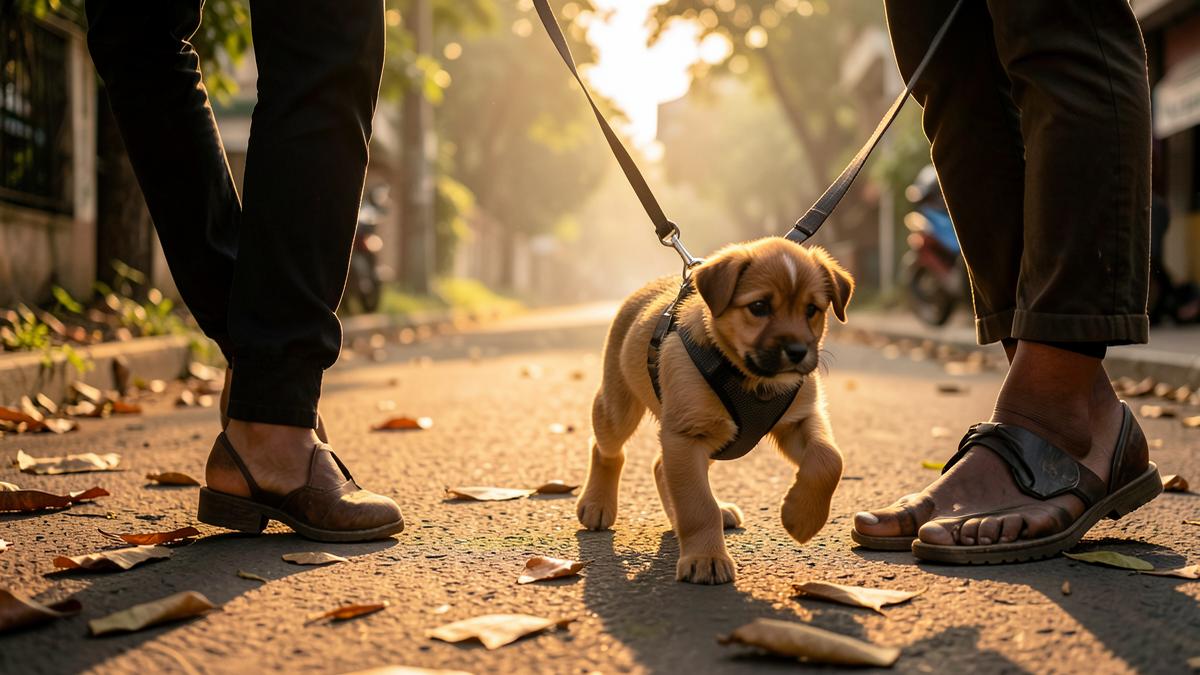
The first walk is the moment most Bengaluru puppy parents get wrong, not because they are careless, but because they are excited. A puppy's first outings decide whether traffic, horns and strangers become normal background noise or lifelong triggers.
When can walks start?
Follow your vet on vaccinations. In practice most puppies are cleared for street walks after the second or third shot, but the socialisation window closes around 16 weeks, so waiting for the last vaccination before your puppy sees anything is a mistake. Carry your puppy, use clean private spaces, and start controlled exposure early, as I explain in puppy socialisation before vaccinations.
Harness, not collar
Use a Y-front harness that does not press across the throat, plus a fixed leash of about 1.5 to 2 metres. No retractable leashes, they teach constant tension. No choke chains, prong collars or slip leads on a puppy, ever. Let the harness become boring at home first: put it on, feed, take it off, repeat for a couple of days.
First walk cheat sheet
The numbers that keep a Bengaluru puppy's first walks positive
How long, and where
Five to ten minutes is a complete first walk. A common rule of thumb is roughly five minutes of walking per month of age, twice a day. Choose a quiet lane at a quiet hour, not a main road at rush hour and not a crowded park. Bengaluru pavements are narrow and uneven, so pick a stretch where you can create distance from anything sudden.
Let the nose lead
A walk is not a march. Let your puppy sniff, stop, look around and process. Every time they glance back at you, mark it and pay. That single habit builds the loose-leash walking and recall you will rely on for years, and it costs nothing. If pulling has already started, my leash pulling guide has the full protocol.
When your puppy freezes
Plenty of puppies plant themselves on the first outing. Do not drag them, and do not pick them up every time either. Crouch a little away, wait, and reward any forward movement. If they are genuinely overwhelmed, calmly carry them to a quieter spot and try again tomorrow with less intensity. Dragging a frozen puppy is how you build a dog who refuses walks at a year old.
Traffic, horns and delivery riders
Distance is your tool. Watch from a lane or a gate, feed while a scooter passes, and move closer over days, not minutes. The same approach works for the doorbell and delivery riders, which I cover in stopping barking at delivery agents.
Street dogs
Bengaluru streets have resident dogs, and most are perfectly reasonable, but a bouncy puppy can provoke a correction. Do not allow nose-to-nose greetings on a tight leash, walk a wide arc, and avoid fixed territories at feeding hours. Your puppy learns more from calmly watching a dog at a distance than from a chaotic close greeting.
Building on the first walk
Once the first week of walks feels calm, add gentle new surfaces, sounds and locations, then start practising known cues outdoors. My Puppy Foundation Program does this walk by walk with you, and Advanced Obedience Training takes recall and loose-leash walking to a reliable level once the basics are in.
Nervous about the first walk? Talk to me NOW !! and I will walk it with you.
About the Author
Govind
K9 Coach · 4+ years with dogs · Bengaluru
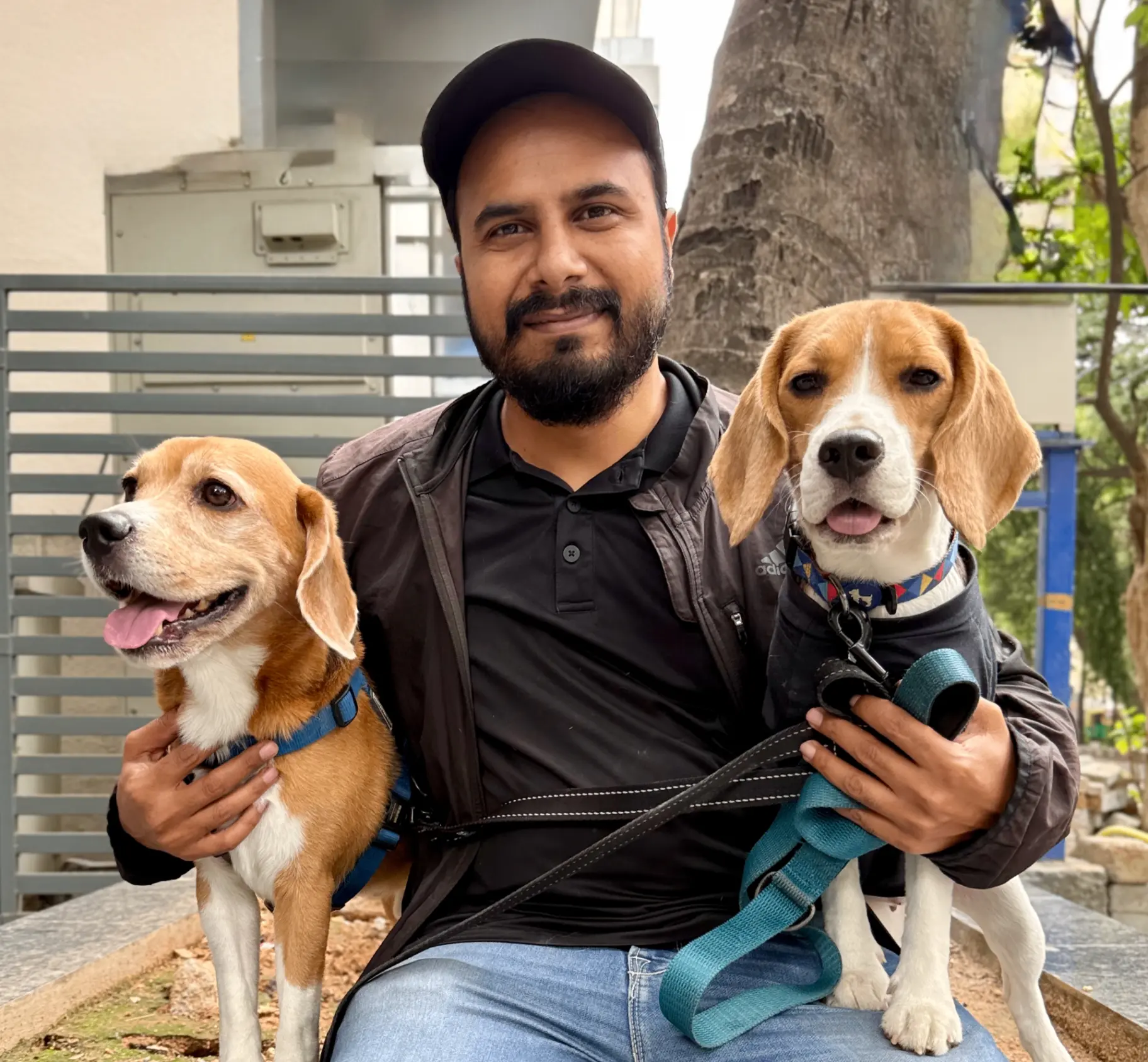
Founder of Paws of Persistence. Certified, reward-based dog trainer specialising in puppy training, Indie dogs and behaviour work across Bengaluru.
More about Govind →