Dog Training Tools and Equipment: What You Actually Need in Bengaluru
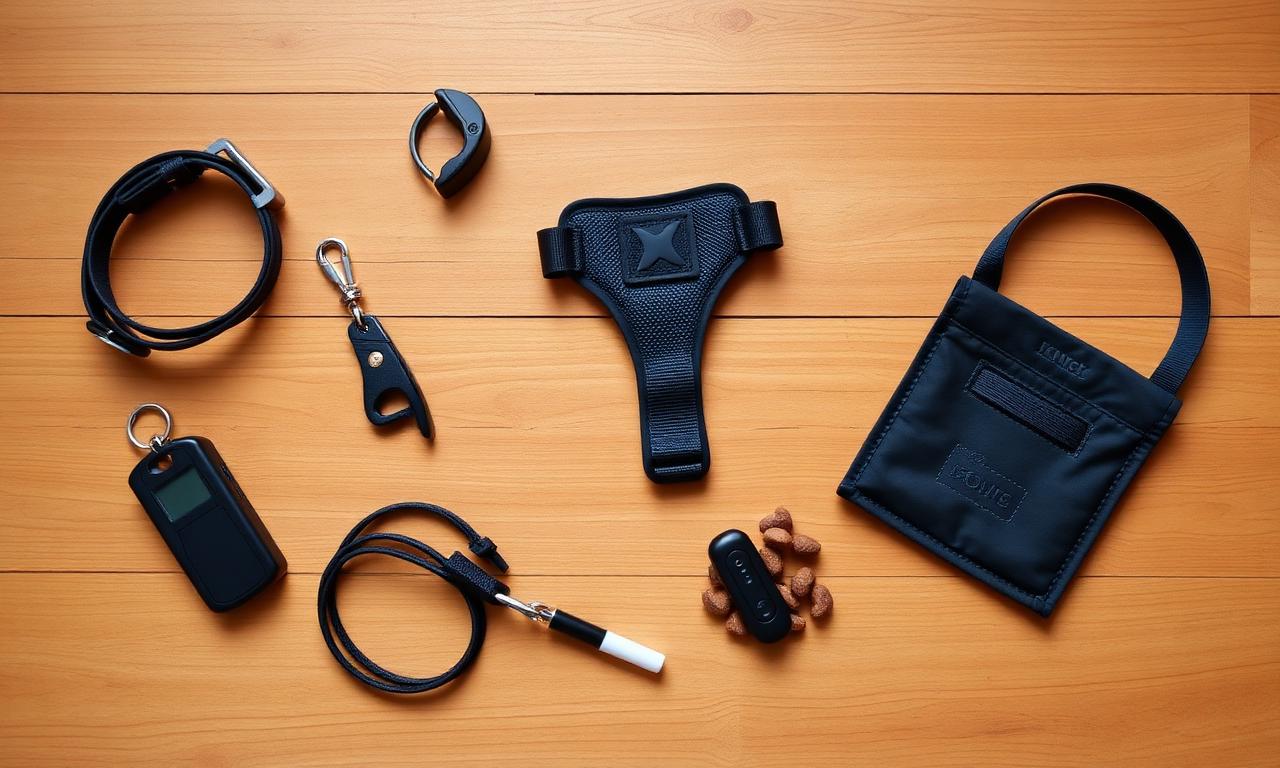
Walk into any pet store in Bengaluru and you'll see a wall of "training tools", spike collars, electric collars, no-pull harnesses with painful chest pressure, retractable leashes, head halters, citronella sprays. 80 percent of it is unnecessary or actively harmful. After training hundreds of Bengaluru dogs, here's the honest, minimal kit that actually works.
The 6-item training kit. 1) A flat collar with ID tag, this is for identification, not for control. 2) A Y-front harness (TruLove, Perfect Fit, or Ruffwear style), the chest strap forms a Y, not a T, so it doesn't restrict shoulder movement. 3) A 1.5 metre flat leash for everyday walks. 4) A 5 metre long line for recall practice and decompression walks. 5) A treat pouch you can open one-handed. 6) A marker, either a clicker or a consistent word like "yes." That's it. Total cost roughly Rs 3,000 to 6,000.
The minimal training kit
Six tools, roughly Rs 3,000 to 6,000 total
Why a Y-front harness over a collar for walks. A collar puts all the force on a dog's trachea when they pull. A Y-harness distributes pressure across the chest and lets the shoulders move freely. For brachycephalic dogs (Pugs, Bulldogs) and any dog that pulls, a harness is non-negotiable. Skip front-clip "no pull" harnesses that cut into the armpit, they cause long-term gait issues.
Why a long line beats a retractable leash. Retractable leashes teach dogs that pulling is rewarded (the leash extends), have weak locking mechanisms, can cause severe rope burns, and snap unpredictably. A 5-metre nylon long line gives the same freedom safely, and you control the slack. Use it in parks, on quiet streets, and for any recall training.
Tools to skip, and why. Prong collars: pain-based, illegal in many countries, and the "compliance" they create comes from suppression, not learning. E-collars (shock collars): the same. Choke chains: outdated and dangerous. Citronella spray collars: punish without teaching the right behaviour. Head halters (Halti, Gentle Leader): not painful but most dogs find them aversive and they require careful conditioning. Anti-bark devices: address the symptom, not the underlying reason your dog is barking.
Real story, pet parent of Bruno, a Boxer in Whitefield. The family came in with a prong collar, a Halti, and a retractable leash because "that's what the previous trainer recommended." Bruno was lunging at every dog. I swapped to a Y-harness, a 5m long line, and a treat pouch. Within 2 weeks of working below Bruno's threshold, the lunging dropped 70 percent. The tools weren't the problem, but the wrong tools had layered fear on top of an already reactive dog.
Treats: the most underrated training tool. Cheap kibble works for easy contexts. For real distractions you need high-value rewards, boiled chicken, paneer cubes, dehydrated liver, or commercial training treats cut tiny. The rule: the harder the situation, the better the reward. Most Bengaluru families under-pay their dogs and then wonder why training stalls.
Marker training (clicker or word). A marker tells the dog "yes, that exact moment, treat coming." It's the difference between "good boy" five seconds late and a precise click the instant their bum hits the floor. For most family dogs a verbal marker ("yes") is enough. For precision work or scared dogs, a clicker is more consistent. Both beat fumbling for a treat with no marker at all.
Indoor training tools. A non-slip mat for "settle" practice. A licki mat or Kong for separation training and grooming desensitisation. A baby gate to manage greetings and house training. Snuffle mats for mental enrichment. These cost very little and prevent dozens of behaviour problems.
What to buy in Bengaluru. Heads Up For Tails, Supertails, and Petsy carry decent harnesses and leashes. For high-quality treat pouches and Y-harnesses, online stores often beat physical pet shops. For long lines, a hardware store nylon rope works fine in a pinch. Don't overspend, decent kit is cheap. The expense is in time, consistency, and good coaching, not equipment.
When in doubt, less is more. Most behaviour problems are solved with patience, food, timing, and a calm leash, not gadgets. If a trainer or shop is pushing you towards a tool you can't explain the purpose of, walk away. Compare options against my honest reviews of Trainer's Pick recommended products before buying.
Final word. The best training tool you own is your patience and your timing. Everything else is a small assist. Buy the basics once, buy them well, and spend the rest of your energy on practising the right things consistently.

About the Author
Govind
K9 Coach · 4+ years with dogs · Bengaluru
Founder of Paws of Persistence. Certified, reward-based dog trainer specialising in puppy training, Indie dogs and behaviour work across Bengaluru.
More about Govind →